In Nehemiah 2:8, Nehemiah tells King Artaxerxes that his concern at Jerusalem is for "the citadel that pertains to the temple, the city wall, and the house I will occupy".
0 Comments
'THE TEMPLE QUEST'...what HaMakom meant to ancient Israel--an excerpt from the book's Epilogue19/11/2022 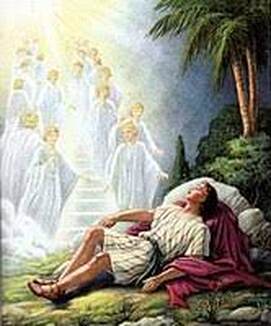 In this short work I have attempted to help the reader engage with Jewish history, mindset, theology, and expectation. It should be clear that throughout the Old Testament, those who walked close to Yahweh Elohim came to recognise a site which, since patriarchal antiquity had been known and revered as Ha Makom. Jacob, after his extraordinary encounter with God at Ha Makom, had named it Beyt-El, House of God—the place of connection between God and man, and which God had chosen as the place for his word and presence to ultimately reside permanently among the people he had also chosen to represent him among the nations, prior to the arrival of Messiah. That name, in the providence of God, should alert us to God’s intention. Jacob’s Beyt-El or House of God, is the original, the genuine Bethel which signals God’s plan. It becomes the ‘ground zero,’ the geo-positioning system we defer to in our search for the Temple and for the true Bethel. In the Patriarchal narratives, God lays the foundations. We should not treat them dismissively… ...The importance and purpose of this place, HaMakom, had become embedded within the heart and soul of those who loved Yahweh and who were committed to following him. The fact that others of colder heart and disposition failed to grasp its importance—as many today fail to lay hold of things of spiritual significance—should not deflect us from the place it held in God’s purpose and plan for the ages. Failing to see its strategic importance and the important typology of that life-giving River that was to flow physically—and then spiritually—at and from that place, Ha Makom, impoverishes us and our understanding of God’s plan for the ages. The naming of Ha Makom as ‘Bethel’ by Jacob, is of huge significance. It is just as important spiritually as the other events of his life which Christians make much of; his cheating of his brother Esau of the birthright; his sojourn in Haran; his return to Canaan; his contest with the Angel and his coming away with a limp and so on. The pronouncement (twice) by the one in whose loins lay the chosen nation, that this was the House of God, is momentous, prophetic, and ordained. The author’s view is that to think otherwise or to make the true Bethel another place, clearly and tragically, misses God’s point! THE TEMPLE QUEST is available for easy and immediate download as an e-book from KOBO, BARNES & NOBLE, APPLE BOOKS SMASHWORDS   An excerpt from my new e-Book 'THE TEMPLE QUEST' 'That Moses was aware of the patriarchal significance of HaMakom becomes clear as we read our way through Deuteronomy—and especially chapter 12. For there, at least six times, Moses uses the now well-recognised name HaMakom as he instructs Joshua and the people about entering the land of promise and where they are to worship. • Verse 5: ‘But you shall seek hamakom where the LORD your God chooses, out of all your tribes, to put His name for His dwelling place; and there you shall go.’ • Verses 10 & 11: ‘But when you cross over the Jordan and dwell in the land which the Lord your God is giving you to inherit, and He gives you rest from all your enemies round about, so that you dwell in safety, there will be hamakom where the Lord your God chooses to make His name abide. There you shall bring all that I command you: your burnt offerings, your sacrifices, your tithes, the heave offerings of your hand, and all your choice offerings which you vow to the Lord.’ • Verses 13 & 14: ‘Take heed to yourself that you do not offer your burnt offerings in every place that you see; but in hamakom which the Lord chooses, in one of your tribes, there you shall offer your burnt offerings, and there you shall do all that I command you.’ • Verse 18: ‘…you must eat them before the Lord your God in hamakom which the Lord your God chooses…’ • Verse 21: ‘If hamakom where the Lord your God chooses to put his name is far from you…then you may eat within your gates…’ • Verse 26: ‘Only the holy things which you have, and your vowed offerings, you shall take and go to hamakom which the Lord chooses.’ These are but a few instances. You will find at least another dozen or more occasions of the use of HaMakom through chapters 13 to 18 of Deuteronomy….. In Moses’ closing words and instructions to the priests and Joshua, he again signifies it when he says in Deuteronomy 31:11… ‘When all Israel comes to appear before the Lord your God in hamakom which he chooses, you shall read this law before all Israel in their hearing.” Later, at the dedication of the refurbished wall in Nehemiah we see... ‘…as Ezra blessed the Lord the people said, “Amen, Amen” while lifting their hands. “and bowing their heads to worship the Lord’. Quite demonstrably this is at the temple. Neither Ezra nor Nehemiah, let alone the Priest, would have held this solemn assembly elsewhere. They knew what God had instructed through Moses; ‘When all Israel comes to appear before the Lord your God in hamakom which he chooses, you shall read this law before all Israel in their hearing’ Excerpts from The Temple Quest IAN HEARD This material is protected by copyright. 
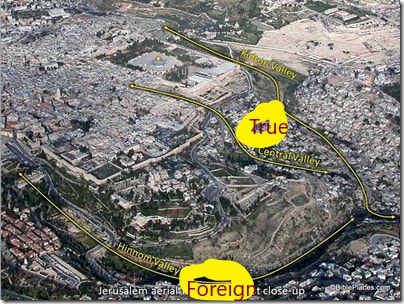
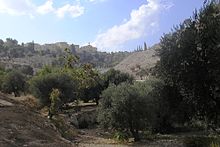
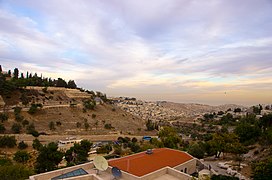
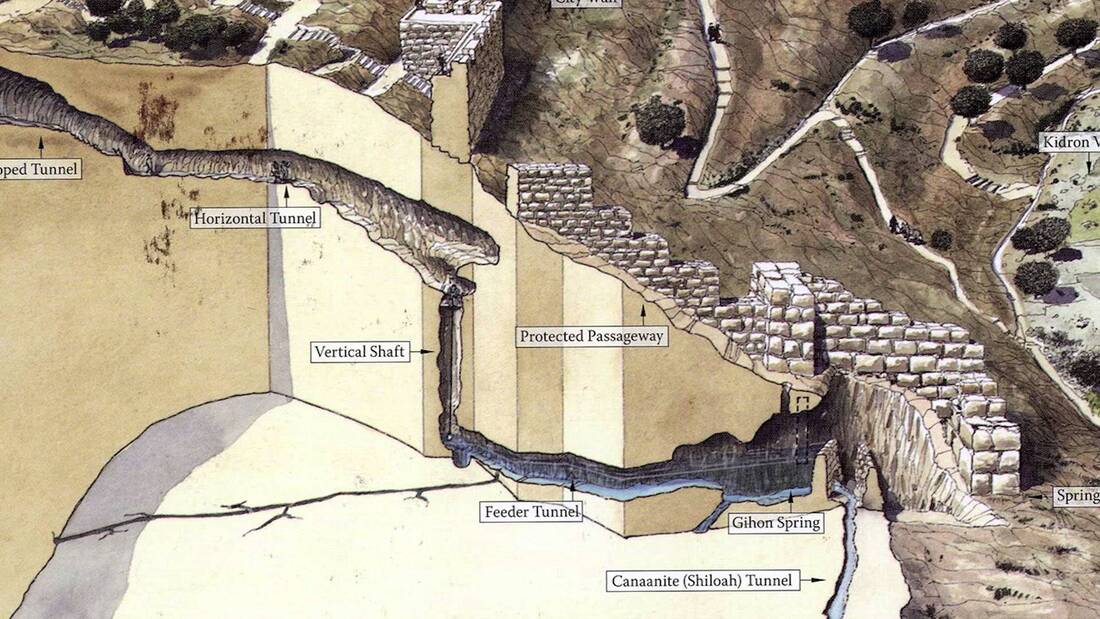
These pictures show the location of the Valley of Hinnom with the sites of the True Ha Makom (in the City of David) and the Foreign ha makom (in Hinnom Valley) spoken of in Jeremiah 19, plus two pictures of Hinnom today. In Jeremiah chapter 19, where was Jeremiah sent to deliver his message about the broken pot? He was sent by the Lord (and instructed to take some of the elders of the people and elders of the priests with him) down into the Valley of Hinnom, at the southern end of the City of David, where all kinds of horrific worship of false gods was undertaken, including the sacrifice of children. There, people had set up an alternate ‘hamakom’. The true Ha MAKOM (The Place, as the Temple was known) was not far away, in the City of David, near the Gihon Spring, but the disobedient and rebellious had set up alternative arrangements in Hinnom. The key to understanding this is verse 4 in which Jeremiah tells them they have made an alien or foreign hamakom in the Valley of Hinnom. The Hebrew can be read thus… ‘…because they forsook me and are making an alien hamakom and are burning incense to other gods…’ The New King James translation says, ‘they have forsaken Me and made this an alien place, (hamakom) because they have burned incense in it to other gods’. Jeremiah goes on to speak of them offering their children to Baal. He then speaks judgement upon their alternative hamakom or place of worship... ‘Therefore, the days come, saith the LORD, that this hamakom shall no more be called Tophet, nor The valley of the son of Hinnom, but The valley of Slaughter’. This makes explicit the respect in which the prophet held the true HaMakom. Then in verse 13, using Scripture4all for example, the alternative ‘hamakom’ becomes even more clear. Here it is… ‘And the houses of Jerusalem, and the houses of the kings of Judah, shall be defiled like hamakom of Topheth (in the Valley of Hinnom), because of all the houses upon whose roofs they have burned incense unto all the host of heaven, and have poured out drink offerings unto other gods.’ This being so, it is apparent that Jeremiah is enraged (as is Yahweh) at the travesty of the people being drawn after other gods and providing for themselves a new centre, an alternate and foreign hamakom wherein they can conduct their awful appeasement of Baal and Molech. Following his denouncement of the false hamakom in Topheth (part of the Valley of Hinnom), Jeremiah returns to the court of the true Temple (verse 14) and declares that judgement is coming on the entire city because the people he has spoken to in Hinnom have ‘stiffened their necks that they might not hear my words.” The existence of this alternate, foreign and false 'ha makom' and Jeremiah's use of that term confirms the existence of the true and real Ha Makom (of which the prophet speaks repeatedly througout the book bearing his name). For those engaged in the debate about the City of David site for the Jewish temples, my new e-Book 'THE TEMPLE QUEST' is a MUST-READ! Using the Bible only and no extra-biblical texts, IAN HEARD convincingly demostrates that the long-revered site visited by Abraham, Isaac, Jacob and the Patriarchs and known to them and the generations to come as Ha Makom, was where the temples stood. Available for immediate download and eye-opening revelation at... KOBO BOOKS SMASHWORDS BARNES AND NOBLE APPLE BOOKS An excerpt from Chapter 7 of my new book ‘THE TEMPLE QUEST’ 'Now David said on that day, “Whoever climbs up by way of the water shaft and defeats the Jebusites…..he shall be chief and captain”…..Then David dwelt in the stronghold and called it the City of David. And David built all around from the Millo and inward. So David went on and became great, and the Lord God of hosts was with him.’… The stronghold was already recognised as Zion, and David named the city after himself, the City of David. The entry point was the ‘tsinnor,’ a water shaft or conduit above the Gihon Spring (see 2 Samuel 5). The etymology of the name Zion or Tzion is obscure, but if, as some scholars have suggested, the word is of Hurrian origin, from their word ‘tseya’ for river or brook, it would make perfect sense, because it was the spring and its stream that identified the site and was of vital importance in God’s programme. The Hebrew word, ‘TSINNOR’ (used above in 2 Samuel 5:8) is translated variously in Psalm 42:7 (where its noise is spoken of), as ‘waterspouts’ or ‘cataracts.’ Certainly, by the time of the writing up of David’s conquest, the location of the citadel and settlement above the spring was clearly known as Tzion or Zion.' (End quote) The pictures below illustrate the TSINNOR or water shaft through which David's commander Joab entered the city. THE TEMPLE QUEST is available as an e-Book from Kobo, Smashwords, Barnes and Noble and Apple Books (among others). Click on preferred provider above to purchase. HA MAKOM—An identifiable location named prophetically by both Jacob and David as 'House of God'27/6/2022  The well-used patriarchal location name Ha Makom is identifiable in the Bible as the area around the Gihon Spring, in the City of David. It is David who ‘staples’ Ha Makom to that site by pitching the tent for the ark and the tabernacle furnishings there.
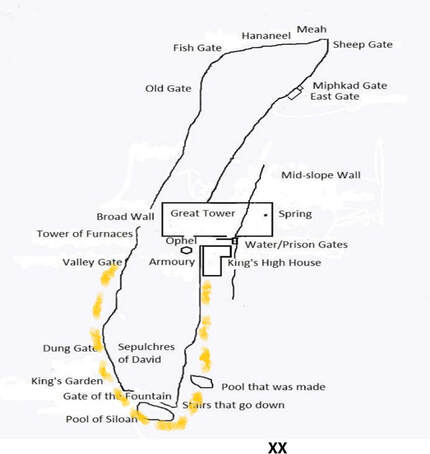
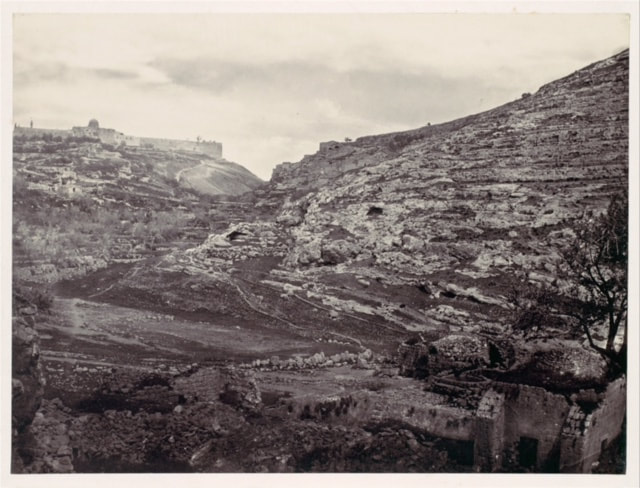
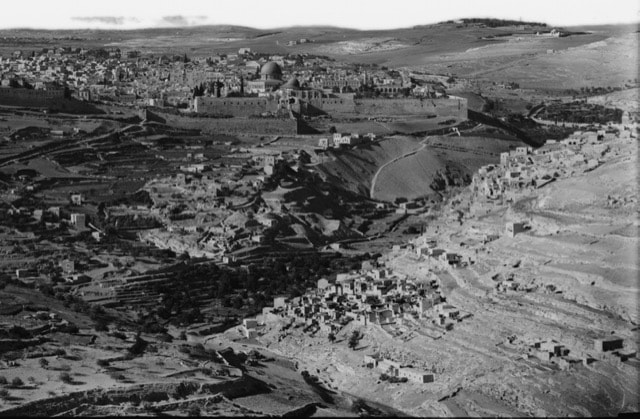
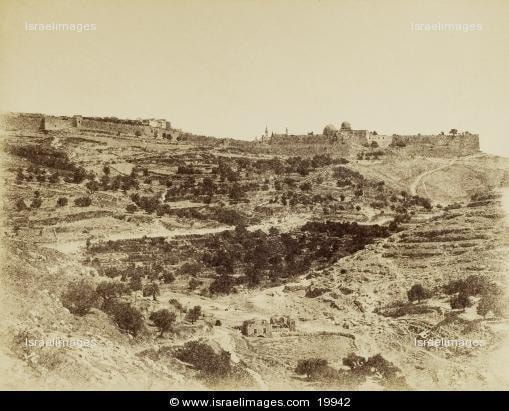
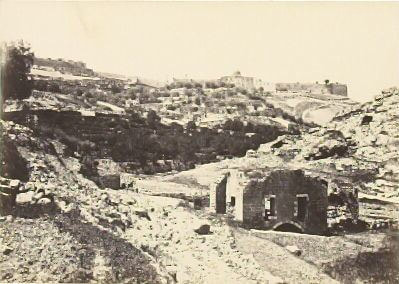
Since the site was prophetically named ‘House of God’ (Beyth-El or Bethel) by Jacob, then later clearly accepted by David as such and restated by him with his words recorded in 1 Chronicles 22:1, “this is the (Bethel) HOUSE OF YAHWEH GOD and this is the altar of burnt offering for Israel”—should we not also accept that as the site on which the temple was built? Read the new E-book 'THE TEMPLE QUEST' by Ian Heard. Click here to go to Smashwords, or, Also available at Barnes and Noble Nookbooks, Kobo, Apple Books and others. On the aerial view at left of the City of David area of Mount Moriah, I have indicated the area at and above the Gihon Spring in the City of David known as Ha Makom and where these words were spoken.  The answer is quite simple: because that is where the temple was located! Follow carefully—and, remember what was in Nehemiah’s heart as disclosed by him to the King of Persia in Nehemiah 2:3 and 8… ’the city and the place of my father’s tombs’ and most importantly ‘the citadel which pertains to the temple, the city wall and the house that I will occupy.’ Following is an abbreviated excerpt from Chapter 12 of my new e-book, ‘THE TEMPLE QUEST’ (Click Here) ‘Nehemiah exits the City of David (note that City of David is the name used by Nehemiah in 3:15 & 12:37), via the Valley Gate (the ‘valley’ being the Tyropeon Valley) on the west and proceeds (anti-clockwise) in the direction of, or towards, a) the Serpent Well, the approximate location of which I have added to the map with XX; and b) the Refuse Gate….and he provides two landmarks. The first is the somewhat distant Serpent Well, so called because it was beside a stone known as Koheleth (serpent) in 1 Kings 1:9. That well is Ein Rogel in the valley south-east of the City of David, and it could be accessed by a gate known as the Gate of the Fountain on our map…. From that gate it was a walk of about three hundred metres, maybe more, to the Serpent Well. The two photographs below, from early 20th century, show the remains of Ein Rogel in the near foreground, and enable us to see its proximity to the ridge of the City of David and, further north, the (much later than Nehemiah) southern wall of Fortress Antonia, later used as the platform for the Muslim shrine, the Dome of the Rock. …The Serpent Well was a landmark on the boundary between Judah and Benjamin that was still intact and well-known to Nehemiah and the people of the City of David. He also mentions the Refuse or Dung Gate which you see on the map.* He was headed in a south to south-east direction to go around the bottom of the City of David, making his way through the rubble of the broken and tumbled walls, and he then turned northward into the Kidron Valley as verse 15 indicates. He calls it NACHAL in Hebrew, the Valley of the Torrent—another name for Kidron, where the overflow from Gihon ran southward—and indeed in storms was a torrent in the valley. As he proceeds up the Kidron Valley, he examines the derelict wall (v.15) and then turns back, retraces his steps, and re-enters the city by the way he exited—the Valley Gate. Nehemiah does not tell us how far northward up Kidron he examined, but since he makes no mention of Gihon or what he calls in Chapter 3:25, 26 & 27 ‘the tower that juts out’ (that is, the structure around Gihon Spring), but only of the stream bed or wadi into which it flowed—and since he is naming recognised landmarks, we can safely assume he did not need to go past Gihon... As we can be certain of the extent of his reconnaissance—and since his concern, as he stated, was the citadel which pertains to the temple, and the reconnaissance included only the lower half of the City of David and its derelict walls and gates, our conclusion must be that the temple was within that defined area.
WHY WOULD THE BIBLICAL WRITERS KEEP SAYING THE TEMPLE WAS IN THE MIDST OF THE CITY…IF IT WAS NOT?21/6/2022 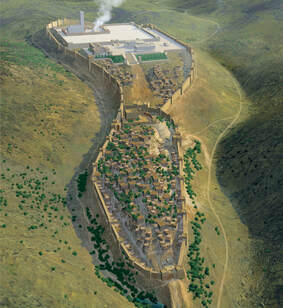 A simple enough question, which it is up to those who keep putting Jerusalem’s temples on what they insist on calling Temple Mount, to answer!
How could it possibly be where this artist's impression shows it? The writer of Psalm 119, in verse 16 says, ‘I will pay my vows to the Lord Now in the presence of all His people, In the courts of the LORD’S house, In the midst of you, O Jerusalem’ TAVEK is the Hebrew word and it means middle, centre, midst. It is used again by Ezekiel, who sees ministers of judgement dispatched to clean up Jerusalem. They are to go through the midst of the city and begin at the sanctuary (Ezk. 9:4 etc) Later in Chapter 11, Ezekiel sees the Glory of God departing the temple (where the Glory dwelt) and he sees it depart (verse 11) from the midst of the city. In Zechariah 2:5 God promises to be the wall of fire around the city and the Glory in its midst. Zechariah later described the return of the Glory in Chapter 8 verse 3 of his book; ‘I will return to Zion and dwell in the midst of Jerusalem.’ In all the above, the word is TAVEK. In Jeremiah’s Lamentations he laments over the destruction of the sanctuary and says, ‘How the gold has become dim! How changed the fine gold! The stones of the sanctuary are scattered At the head of every street’ He is speaking, not of the precious stones for they would be taken as spoil, but of the building stones. If they were scattered at the head of every street, clearly the streest of the city ran to and about the temple precinct. In Psalm 46:5, the sons of Korah are singing the praises of the God as their refuge and strength. Verse 4 speaks of the river that makes glad the city of God and the dwelling place of the Most High (the Gihon stream)—and then in verse 5, ‘God is in her midst, she shall not be moved.’ In this case the Hebrew word is QEREB meaning the inward or innermost part (in Exodus 29:13 it is used of the entrails of the animal).  There is talk and various reports of the temple furnishings and a high priest being prepared in secret and it may indeed, be true.
But how could the Jewish people ever rebuild the temple and reinstitute sacrifices and worship at the presently assumed site of Jerusalem’s ancient temple—without starting World War III? What if the assumed site on a particular part of Mount Moriah is altogether incorrect? What if that imagined site has been based on unquestioned assumption after assumption? Or even some deceptive ‘sleight of hand’? And—more pertinently—what if there is little impediment to prevent a temple being built where Solomon’s and the later temples actually stood, in the City of David, just a few hundred metres south of the Muslim Shrine, the Dome of the Rock? Ian Heard's latest book, offered as an e-book for easy access, will persuade you, using Biblical references alone, that this is so. Click HERE to purchase at only US$5.50 or use the button below. Or, go to your favourite e-book provider like Barnes & Noble, Apple Books, Kobo and many others.  FROM THE INTRODUCTION TO my newest e-book ‘THE TEMPLE QUEST’…here is why it is important to see what the Bible says on this important subject.
This material is protected by copyright. ‘THE TEMPLE QUEST’ is accessible for a mere US$5.50 here … https://www.smashwords.com/books/view/1142592 A ’MUST READ’ FOR THOSE WHO BELIEVE A TEMPLE MUST AGAIN STAND IN JERUSALEM! |
From Ian Heard Archives
November 2023
Jerusalem Temple
|

 RSS Feed